Abstract
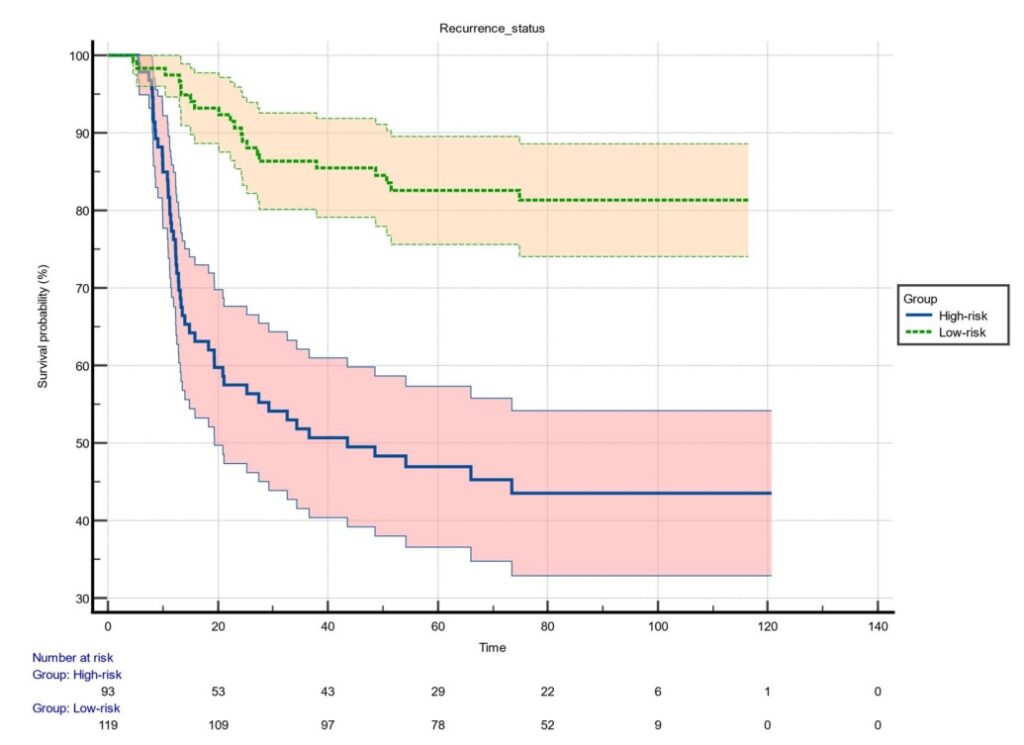
This study aims to develop and internally validate a model based on imaging findings and clinical data to predict the prognosis of head and neck squamous cell carcinoma (HNSCC) patients who received radiotherapy. We retrospectively included 215 HNSCC patients who received radiotherapy from October 2003 to August 2013, with available abdominal computed tomography (CT) scans or whole-body positron emission tomography (PET)/CT acquired both before and after radiotherapy. Predictors were selected based on a comprehensive literature review and clinical expert opinion. A Cox regression analysis was performed to develop prediction models for survival, recurrence, and HNSCC-specific mortality. Bootstrap and Jack-Knife methods were implemented for internal validation. Calibration, decision-curve analyses, and time-dependent receiver operating characteristic (ROC) curves were conducted. Finally, a survival probability calculator for different timepoints was produced. Of the included participants, 74 (37.1%) died, and 71 (33.5%) experienced tumor recurrence. Age, pre-radiotherapy skeletal muscle index (SMI), and post-radiotherapy SMI were the most dominant predictors. The Akaike Information Criterion (AIC) values for survival, recurrence, and HNSCC-specific mortality model were 662.8, 700.8, and 528.8, respectively. Area under curve (AUC) values were 0.867, 0.758, and 0.747 in that order. Good calibrations were achieved. Furthermore, the internal validation and decision curve analyses demonstrated the model’s utility across a broad spectrum of outcome probability levels. The integrated imaging-clinical models performed well in predicting the survival, recurrence, and HNSCC-specific mortality of patients and may contribute to individualized HNSCC management.